
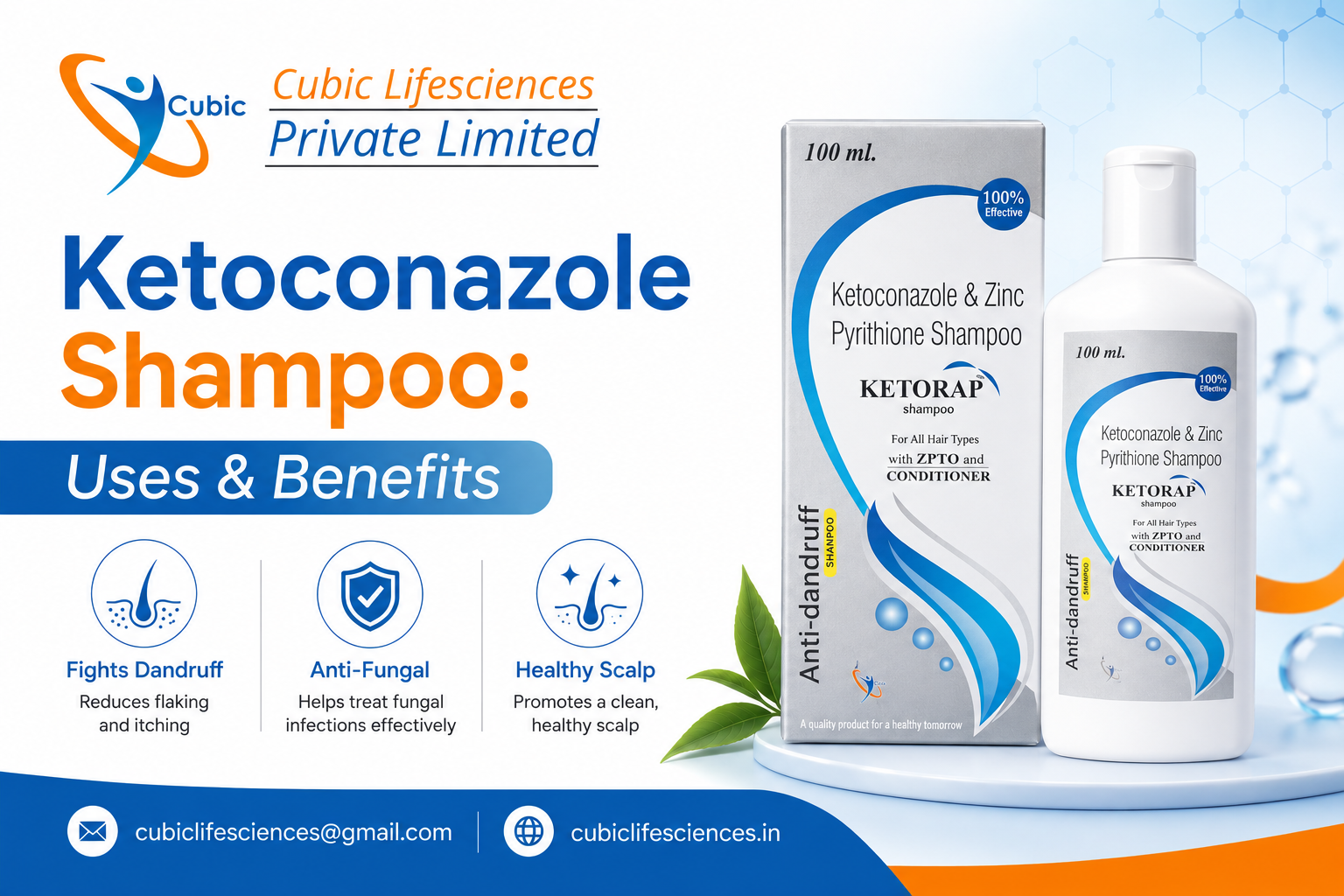
Dandruff, itchy scalp, and fungal scalp infections are among the most common hair and scalp concerns affecting people of all ages. While many over-the-counter shampoos promise relief, not all of them address the root cause of the problem. This is where ketoconazole shampoo stands out.
Ketoconazole shampoo is widely recommended by dermatologists because it targets the fungi responsible for many scalp conditions. Whether you are struggling with stubborn dandruff, scalp irritation, or recurring fungal infections, understanding the various ketoconazole shampoo uses can help you choose the right treatment.
In this guide, we’ll explore what ketoconazole shampoo is, how it works, its benefits, proper usage, potential side effects, and why healthcare professionals often recommend formulations such as Ketoconazole 2% with Zinc Pyrithione shampoo from Cubic Lifesciences.
What Is Ketoconazole Shampoo?
Ketoconazole shampoo is a medicated antifungal shampoo designed to treat scalp conditions caused by fungal overgrowth. The active ingredient, ketoconazole, belongs to a class of medications known as imidazole antifungals.
It works by stopping the growth of fungi and yeast that contribute to dandruff, seborrhoeic dermatitis, and other scalp infections. Unlike regular cosmetic shampoos, ketoconazole shampoo treats the underlying cause rather than simply masking symptoms.
Many advanced formulations also combine ketoconazole with zinc pyrithione, which offers additional antibacterial and antifungal benefits for enhanced scalp protection.
Ketoconazole Shampoo Uses
Understanding the primary ketoconazole shampoo uses can help determine whether it is suitable for your scalp condition.
1. Treatment of Dandruff
One of the most common uses of ketoconazole shampoo is the treatment of dandruff.
Dandruff often occurs due to an overgrowth of a naturally occurring yeast called Malassezia. This fungus can irritate the scalp and lead to excessive flaking.
Ketoconazole helps control fungal growth, reducing the following:
- White flakes
- Itching
- Redness
- Scalp irritation
Many users notice visible improvement within a few weeks of regular use.
2. Managing Seborrheic Dermatitis
Seborrhoeic dermatitis is a chronic skin condition that causes:
- Yellow or white flakes
- Red patches
- Oily scalp
- Persistent itching
Because fungal activity is often linked to seborrhoeic dermatitis, ketoconazole shampoo is frequently prescribed by dermatologists as part of a long-term management plan.
Regular use helps keep flare-ups under control and improves scalp comfort.
3. Treating Fungal Scalp Infections
Another important use of ketoconazole shampoo is treating fungal infections affecting the scalp.
These infections can cause:
- Scalp inflammation
- Itching
- Scaling
- Hair thinning in affected areas
Ketoconazole targets fungal organisms directly, helping restore scalp health and preventing further spread.
4. Reducing Scalp Itching and Irritation
Persistent itching is often linked to fungal imbalance or inflammation.
By eliminating fungal overgrowth, ketoconazole shampoo helps the following:
- Soothe irritated skin
- Minimize scratching
- Reduce redness
- Improve overall scalp comfort
This makes it beneficial for people experiencing chronic scalp discomfort.
5. Supporting Hair Health
Although ketoconazole shampoo is not primarily a hair growth product, healthier scalp conditions often support stronger hair growth.
Research suggests that reducing inflammation and fungal activity may create a healthier environment for hair follicles.
Many users report:
- Less hair breakage
- Reduced shedding caused by scalp irritation
- Improved hair appearance
However, ketoconazole shampoo should not be viewed as a standalone treatment for hair loss.
How Does Ketoconazole Shampoo Work?
To understand the effectiveness of ketoconazole shampoo, it’s helpful to know how it works.
Ketoconazole disrupts the cell membranes of fungi, preventing them from growing and multiplying. Once fungal growth is controlled, scalp inflammation begins to decrease.
This process helps:
- Remove flakes
- Reduce itching
- Control redness
- Prevent recurring infections
When combined with zinc pyrithione, the shampoo provides broader protection against scalp microorganisms while maintaining scalp hygiene.
Benefits of Using Ketoconazole Shampoo
There are several reasons why dermatologists recommend ketoconazole shampoo.
Effective Against Root Causes
Unlike ordinary shampoos that temporarily remove flakes, ketoconazole addresses the fungal source of many scalp conditions.
Long-Lasting Relief
Consistent use can help prevent recurring dandruff and scalp irritation.
Suitable for Various Scalp Conditions
It may help manage:
- Dandruff
- Seborrheic dermatitis
- Fungal scalp infections
- Itchy scalp conditions
Easy to Use
Ketoconazole shampoo can be incorporated into your existing hair care routine with minimal effort.
How to Use Ketoconazole Shampoo Correctly
Using the shampoo correctly is essential for achieving the best results.
Step 1: Wet Your Hair Thoroughly
Use lukewarm water to wet your scalp and hair.
Step 2: Apply the shampoo.
Take an adequate amount and gently massage it into the scalp.
Focus on affected areas rather than the hair strands alone.
Step 3: Leave It On
Allow the shampoo to remain on the scalp for approximately 3 to 5 minutes.
This gives the active ingredients time to work effectively.
Step 4: Rinse Thoroughly
Wash off completely with water.
Step 5: Follow Recommended Frequency
Most dermatologists recommend using ketoconazole shampoo:
- 2 to 3 times weekly during treatment
- Once weekly or as advised for maintenance
Always follow healthcare provider instructions or product directions.
Who Can Use Ketoconazole Shampoo?
Ketoconazole shampoo is generally suitable for:
- Adults with dandruff
- Individuals with seborrheic dermatitis
- People experiencing fungal scalp infections
- Those with chronic scalp itching caused by fungal overgrowth
However, children and individuals with specific scalp conditions should consult a healthcare professional before use.
Possible Side Effects
Ketoconazole shampoo is generally well-tolerated, but some users may experience mild side effects.
These may include:
- Temporary scalp dryness
- Mild irritation
- Burning sensation
- Changes in hair texture
- Increased scalp sensitivity
Serious reactions are uncommon. If irritation persists, discontinue use and seek medical advice.
Ketoconazole Shampoo vs Regular Anti-Dandruff Shampoo
Many people wonder whether ketoconazole shampoo is better than standard anti-dandruff shampoos.
Regular Anti-Dandruff Shampoo
Typically focuses on:
- Removing flakes
- Controlling oil
- Providing temporary relief
Ketoconazole Shampoo
Targets:
- Fungal overgrowth
- Root causes of dandruff
- Chronic scalp conditions
- Long-term management
For persistent or recurring dandruff, healthcare professionals often recommend ketoconazole-based formulations.
Why Ketoconazole and Zinc Pyrithione Work Well Together
Modern scalp care formulations frequently combine ketoconazole with zinc pyrithione.
This combination offers dual-action benefits:
Ketoconazole
- Powerful antifungal action
- Controls fungal growth
- Reduces scalp inflammation
Zinc Pyrithione
- Additional antifungal support
- Antibacterial protection
- Helps maintain scalp balance
Together, they provide comprehensive scalp care and improved symptom control.
Choosing a Quality Ketoconazole Shampoo
When selecting a medicated shampoo, quality and formulation matter.
Look for products that:
- Contain clinically effective ingredients
- Follow quality manufacturing standards
- Are recommended by healthcare professionals
- Provide balanced scalp care
Cubic Lifesciences offers Ketoconazole 2% with Zinc Pyrithione Shampoo, formulated to help manage dandruff, scalp irritation, and fungal scalp concerns effectively.
The combination of active ingredients is designed to support healthier scalp conditions while helping reduce recurring symptoms.
Practical Tips for Better Scalp Health
Using ketoconazole shampoo is only one part of maintaining a healthy scalp.
Consider these additional practices:
Keep Your Scalp Clean
Wash your hair regularly according to your scalp type.
Avoid Harsh Hair Products
Strong chemicals can irritate the scalp and worsen symptoms.
Manage Stress
Stress can contribute to dandruff flare-ups and scalp sensitivity.
Maintain a Healthy Diet
Balanced nutrition supports overall skin and scalp health.
Follow Treatment Consistently
Regular use is often necessary to achieve long-term results.
When Should You See a Dermatologist?
While ketoconazole shampoo is effective for many people, professional evaluation may be necessary if:
- Symptoms persist after several weeks
- Scalp inflammation worsens
- Hair loss becomes significant
- You develop painful scalp lesions
- Over-the-counter treatments fail
A dermatologist can diagnose the underlying condition and recommend the most appropriate treatment plan.
Conclusion
Among the most trusted medicated scalp care solutions available today, ketoconazole shampoo remains a preferred choice for managing dandruff, seborrhoeic dermatitis, and fungal scalp infections.
The various ketoconazole shampoo uses extend beyond simply removing flakes. Targeting fungal overgrowth at the source, it helps reduce itching, irritation, inflammation, and recurring scalp problems.
For individuals seeking effective scalp care, formulations that combine 2% ketoconazole and zinc pyrithione, such as those offered by Cubic Lifesciences, provide a comprehensive approach to maintaining scalp health and long-term comfort.
Consistent use, proper scalp hygiene, and professional guidance when necessary can help you achieve healthier hair and a healthier scalp.
Frequently Asked Questions (FAQs)
1. What is ketoconazole shampoo mainly used for?
Ketoconazole shampoo is primarily used to treat dandruff, seborrhoeic dermatitis, and fungal scalp infections by controlling fungal growth on the scalp.
2. How often should I use ketoconazole shampoo?
Most users apply it 2 to 3 times per week during treatment, although frequency may vary depending on medical advice and product instructions.
3. Can ketoconazole shampoo help with hair loss?
It is not a direct hair loss treatment, but it may support healthier hair growth by reducing scalp inflammation and improving scalp conditions.
4. How long does it take to see results?
Many users notice improvements in dandruff and itching within 2 to 4 weeks of consistent use.
5. Can I use ketoconazole shampoo regularly?
Yes, many people use it regularly for maintenance after initial treatment. Follow the instructions provided by your healthcare professional.
6. Is ketoconazole shampoo suitable for all hair types?
Generally, yes. However, individuals with sensitive skin or specific scalp conditions should consult a healthcare provider before use.
7. What makes ketoconazole and zinc pyrithione a good combination?
The combination provides enhanced antifungal and antibacterial protection, helping manage dandruff and maintain overall scalp health more effectively.