
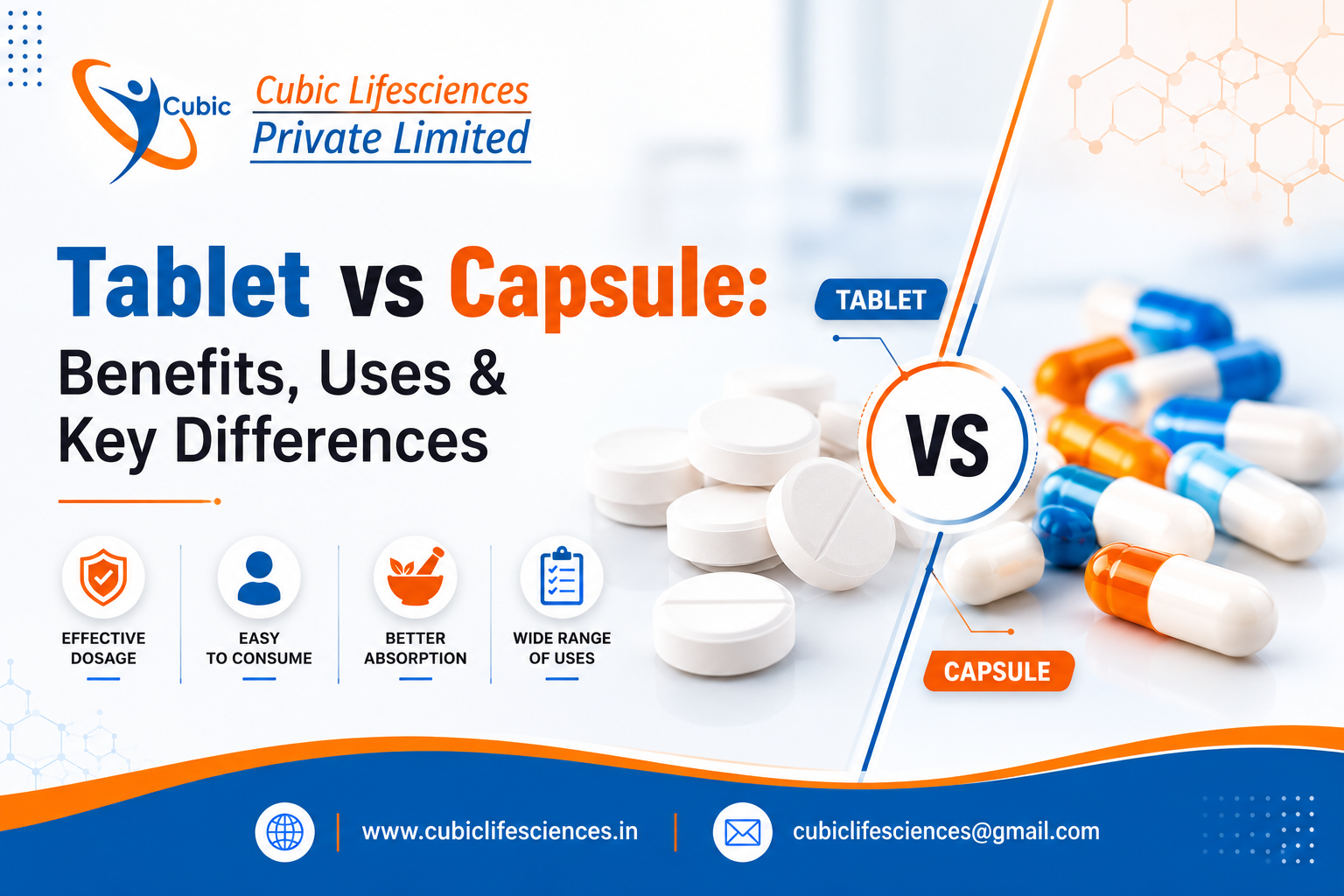
If you’re in the pharma distribution or PCD franchise business, you already know that “tablet vs. capsule” isn’t just a patient-side question; it’s a business decision. Product mix, regional demand, storage logistics, margins—all of it ties back to dosage form. Get it wrong, and you’re sitting on slow-moving stock or fielding complaints about shelf life.
The Problem: Picking the Wrong Dosage Form Mix Costs You Sales
Here’s what happens on the ground. A distributor stocks up heavy on capsules for a region with poor cold-chain infrastructure and hot, humid summers. Six months later, half the batch shows signs of degradation because capsules are more sensitive to heat and moisture. Or a PCD franchise partner promotes tablets in a market where doctors are actively prescribing capsules for faster absorption and loses out to a competitor who read the demand correctly.
This isn’t rare. Most people in pharma sales know tablets and capsules exist, but few actually understand the manufacturing and clinical differences well enough to make smart stocking and promotion decisions.
Why It Matters in Terms of Your Business Operations
Tablets consist of compression of drug ingredients mixed with binders and excipients into a solid form. Tablets are hard-wearing, inexpensive to manufacture, and have a higher storage life thus, they are better suited for areas with unreliable storage facilities and longer supply chains.
Capsules, on the other hand, contain powder or liquid drugs enclosed in a dissolvable capsule. Due to its dissoluble nature, the drug takes effect almost instantly after being consumed, which is the very reason why capsules are recommended in cases of pain killers, some antibiotics, and supplements. The drawback? Capsules require controlled storage and a higher turnover of stock.
What This Means for PCD Franchise Partners
If you’re evaluating a PCD franchise opportunity, the tablet-capsule ratio in a company’s product portfolio tells you a lot. A manufacturer offering both under proper GMP and WHO-GMP certification gives you the flexibility to serve different therapy segments and prescriber preferences without switching suppliers.
What This Means for Distributors and Pharmacists
Stock rotation strategy should differ by dosage form. Capsules need tighter FEFO (first-expiry-first-out) discipline and climate-controlled storage. Tablets give you more breathing room, which is useful in Tier 2 and Tier 3 markets where storage infrastructure isn’t always reliable.
What This Means for Entrepreneurs Entering Pharma
If you’re starting a pharma marketing or distribution business, don’t lock into one dosage form. Demand shifts by season, region, and therapy area. A diversified product basket covering both tablets and capsules protects your business from being over-exposed to one format’s limitations.
The Solution: Partner With a Manufacturer That Covers Both, Properly
At Cubic Lifesciences, we manufacture tablets and capsules across multiple therapeutic segments under strict GMP-certified processes, with every batch tested for dissolution, purity, and stability before it leaves our facility. We work directly with PCD franchise partners, distributors, and pharmacists to help them build a product basket suited to their specific market — not a generic one-size-fits-all list.
Our team also advises partners on which dosage forms perform better in which regions, based on real distribution data and prescriber trends so you’re not guessing with your inventory.
Frequently Asked Questions
Q1. Which sells faster in the market — tablets or capsules?
It depends on the therapy segment. Pain management and certain antibiotics move faster in capsule form due to quicker onset. Chronic disease management (diabetes, cardiac) tends to lean heavily on tablets due to cost and shelf stability.
Q2. Are capsules more expensive to manufacture than tablets?
Generally yes, because of the shell material and more controlled manufacturing environment required.
Q3. What should PCD franchise partners look for in a manufacturer’s tablet-capsule range?
GMP/WHO-GMP certification, third-party testing reports, and a broad enough range to cover multiple therapy areas without needing multiple suppliers.
Q4. Do tablets and capsules need different storage conditions during distribution?
Yes. Capsules need cooler, drier storage due to gelatin sensitivity. Tablets are more forgiving but still need protection from excess humidity.
Q5. Can I get both tablets and capsules under one PCD franchise with Cubic Lifesciences?
Yes, our product range spans multiple dosage forms across multiple therapeutic categories.
Conclusion
Understanding the tablet vs. capsule difference isn’t just pharmacology; it’s a distribution and business strategy decision. Whether you’re stocking, prescribing, or building a franchise portfolio, the right mix depends on your market’s climate, prescriber habits, and patient needs.
Explore Cubic Lifesciences’ full Tablets & Capsules range and franchise opportunities here: Cubic Lifesciences – Tablets & Capsules